Jan Willem de Groot, experienced Dutch lawyer
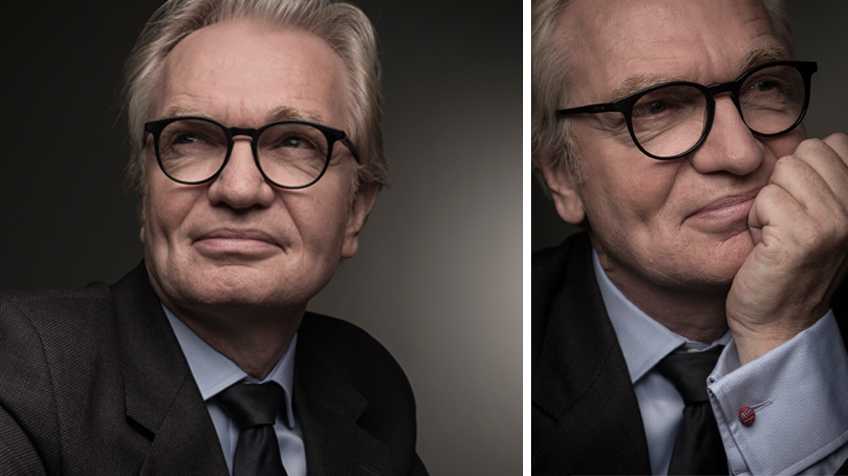
Jan Willem de Groot, Dutch lawyer based in Amsterdam, has been active in Dutch civil law since 1984. From 1987 to 2020, he practised as a licensed attorney (advocaat) with a focus on commercial contracts and litigation. Today, he leads the Dutch Law Institute as its founder and chairman, an independent foundation in Amsterdam. The Institute does not accept formal advisory mandates, but can, in certain circumstances, provide an initial assessment to those seeking legal guidance, particularly foreign lawyers, and point them in the right direction for next steps.
How does the Dutch Law Institute help with questions about Dutch law?
When faced with a legal question involving the Netherlands, foreign businesses and their advisers often encounter fundamental decisions. Should they initiate proceedings before a Dutch court, pursue arbitration, or explore an out-of-court settlement first? Which Dutch lawyer has the right expertise? And what costs should they realistically expect?
The Dutch Law Institute does not provide legal representation and does not accept formal mandates. What the Institute can do is offer initial guidance: Jan Willem de Groot, Dutch lawyer, provides a non-binding first assessment on request and outlines possible directions. His experience shows that foreign parties typically need help at two points. First, in understanding which procedural options are available under Dutch law, such as civil proceedings, mediation, or arbitration. Second, in finding a suitable contract lawyer or litigation lawyer from a network of firms that the Institute has assessed as competent and effective.
Under Article 6:74 of the Dutch Civil Code (Burgerlijk Wetboek), for example, a claim for damages in case of breach of contract only arises once the debtor is in default (verzuim). Such differences from other legal systems are often decisive for foreign businesses, yet frequently recognised too late. For an initial, non-binding response, you can reach the Institute by email at info@dutch-law.com.
In what situations can the Dutch Law Institute help?
Expert guidance on Dutch law is advisable as soon as a business or contractual matter involving the Netherlands has legal consequences that you cannot fully oversee. In practice, Jan Willem de Groot regularly sees that companies only make contact once a deadline has already passed or court proceedings are imminent. The statutory limitation period for contractual claims under Article 3:307 of the Dutch Civil Code is only five years and can expire through inaction.
The following overview shows typical situations in which the Dutch Law Institute can point those seeking legal advice, and in particular foreign lawyers, in the right direction:
| Situation | How the Dutch Law Institute can help |
|---|---|
| Contract dispute with a Dutch party | Initial assessment of your legal position, guidance on default and termination options, referral to a specialist lawyer |
| Debt collection in the Netherlands | Guidance on collection strategy and referral to a suitable collection lawyer |
| Questions about Dutch general terms and conditions | General pointers on validity under Articles 6:231-6:247 of the Dutch Civil Code, referral to a contract lawyer for detailed review |
| Employment law questions in the Netherlands | Guidance on dismissal procedures and Dutch particularities, referral to an employment lawyer |
| Finding a Dutch lawyer | Independent recommendation based on area of law, track record, and fee structure |
| Cross-border contractual question | Initial indication of whether Dutch law or the Vienna Sales Convention (CISG) may be relevant |
What Jan Willem de Groot regularly encounters: many foreign businesses underestimate the role of reasonableness and fairness (redelijkheid en billijkheid) in Dutch law. This principle, enshrined in Article 6:248 of the Dutch Civil Code, can restrict or expand contractual clauses. For foreign companies this is often a surprising concept, which the Hoge Raad (the Dutch Supreme Court) has further developed in settled case law.
What education and experience does Jan Willem de Groot have?
Jan Willem de Groot is a Dutch lawyer with a law degree from the Vrije Universiteit Amsterdam and a postgraduate fellowship at King's College London. From 1987 to 2020, he was admitted as an attorney (advocaat) with the Netherlands Bar Association (Nederlandse Orde van Advocaten). During those 33 years, he litigated before all district courts and courts of appeal in the Netherlands and conducted arbitration proceedings at all major Dutch arbitration institutes. He represented numerous foreign clients in high-profile and complex commercial disputes.
His areas of expertise included, and continue to include, Dutch contract law, liability law, litigation, and international commercial law. Approximately 75% of his case work concerned cross-border matters, frequently involving German, British, or American clients or counterparties. Jan Willem de Groot, founder of the Dutch Law Institute, has advised clients in the manufacturing, transport, technology, entertainment, retail, agriculture, and the yachting industry throughout his career.
After ending his active bar admission in 2020, Jan Willem continued to work as a legal professional in Dutch law. He regularly publishes on topics of Dutch civil law on the Dutch Law Institute website and gives lectures on Dutch contract law and litigation. His international network comprises lawyers, in-house counsel, and institutions across Europe, the United States, Canada, the Caribbean, Brazil, Suriname, Asia, the Middle East, and several African countries, including Kenya, Ghana, and South Africa.
How do you find the right Dutch lawyer for your case?
When looking for a Dutch lawyer, choosing the right specialist is decisive for the outcome of any matter. A contract lawyer works differently from a litigation lawyer, and the costs of a Dutch lawyer vary considerably. Hourly rates typically range from EUR 200 to EUR 450, depending on experience and area of law.
The Dutch Law Institute can point foreign businesses and lawyers in the right direction in this search. In practice, Jan Willem frequently encounters the problem that a party engages a generalist where a specialist is required. In a contract dispute over a distribution agreement, for example, you need a lawyer with experience in the specific industry and the relevant contract type, not merely a general civil law practitioner.
The Institute only refers to lawyers who have received favourable assessments and who, based on the information available to the Institute, are considered competent and effective. Relevant factors include area of law, demonstrable experience, language skills, and a transparent fee structure. Jan Willem de Groot, Dutch lawyer, can provide some general pointers on the likely strategy and cost expectations. However, every situation is different, and formal legal advice is always provided by the referred lawyer. Feel free to contact the Institute at info@dutch-law.com.
About the Dutch Law Institute
The Dutch Law Institute is an independent Dutch foundation (stichting) based in Amsterdam, established in 2021 by Jan Willem de Groot together with a group of Dutch lawyers and entrepreneurs. The Institute makes Dutch law accessible to an international audience through publications, through the assessment of Dutch lawyers, and through initial guidance for those seeking legal help who do not yet know their way into the Dutch legal system.
The Institute's core areas are Dutch contract law, employment law, litigation and arbitration, and the referral of qualified lawyers in the Netherlands. It also maintains a comprehensive English-language guide to Dutch law at dutch-law.com, used by lawyers, in-house counsel, and researchers worldwide.
For an initial response to your question about Dutch law or for a referral to a Dutch lawyer, you can reach the Dutch Law Institute at info@dutch-law.com. Jan Willem de Groot and his team typically respond within 24 hours.